
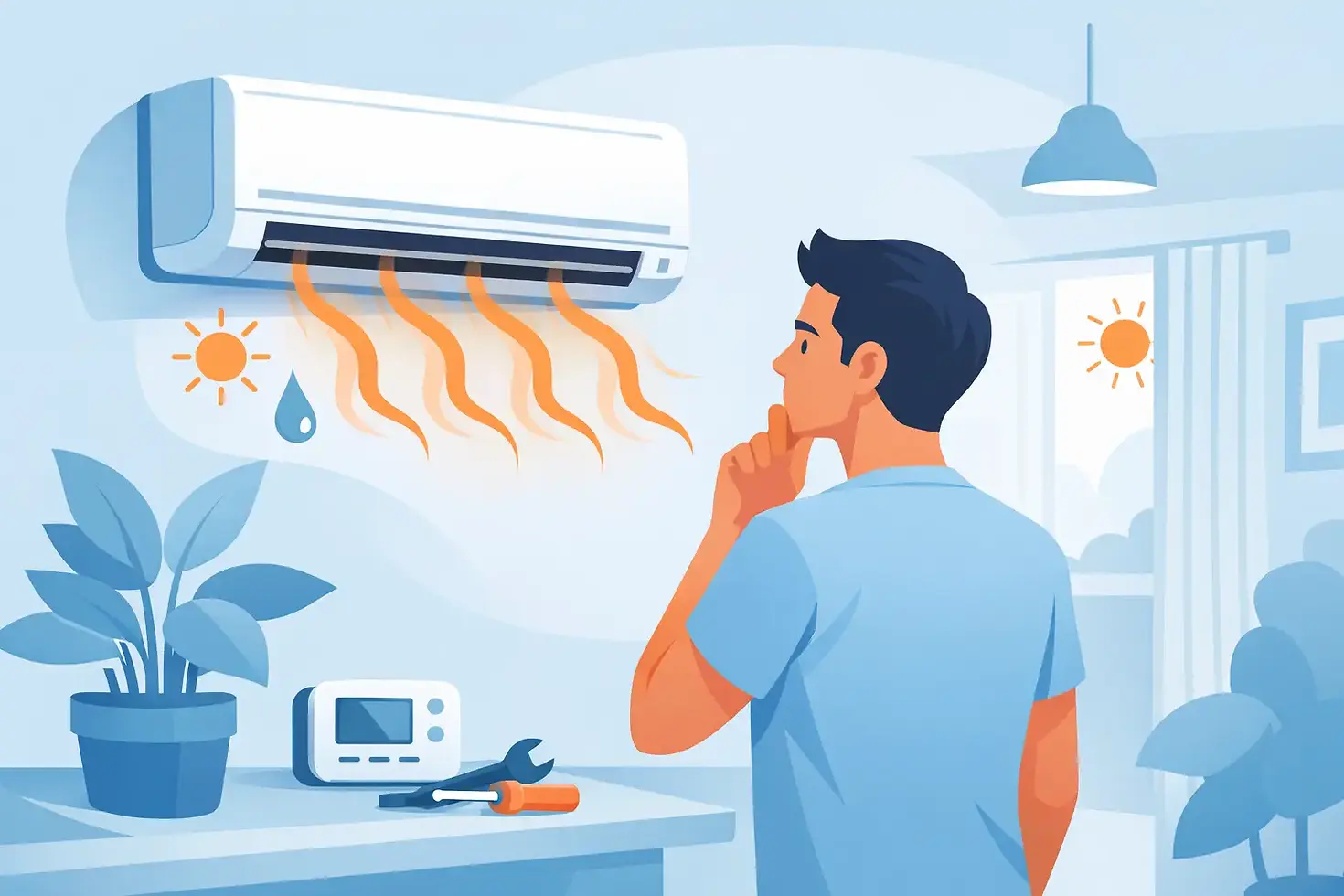
Why Is AC Blowing Warm Air?

You lower the thermostat, wait for the familiar rush of cool air, and instead the vents start pushing out warmth. If you’re asking why is AC blowing warm air, the answer can range from a simple setting issue to a repair that needs attention quickly. In San Diego, where comfort matters most when temperatures climb, warm airflow is more than annoying - it usually means your system is struggling somewhere in the cooling cycle.
The good news is that not every case points to a major breakdown. Some problems are easy to spot, and some are warnings that let you act before a complete failure. The key is knowing what is normal, what is not, and when it makes sense to bring in a licensed HVAC team.
Why is AC blowing warm air in the first place?
An air conditioner cools your space by removing heat from indoor air and transferring it outside. When that process gets interrupted, you can still have air moving through the vents, but it will not be cold. That is why warm air from the supply vents does not always mean the system is fully dead. In many cases, the blower is still running while the cooling side is not.
That distinction matters because it narrows down the issue. If air is flowing but not cooling, the problem may involve thermostat settings, restricted airflow, low refrigerant, frozen coils, electrical trouble, or an outdoor unit that is not doing its job.
Start with the simplest possibilities
Before assuming the worst, check the thermostat. It sounds basic, but it causes more service calls than most people expect. Make sure the system is set to cool, not heat or fan only. If the fan is switched to on instead of auto, it may keep circulating air even when the cooling cycle is off, which can feel warm compared to the temperature you expect.
Next, look at the temperature setting itself. If someone adjusted it higher than usual, or if a programmable thermostat changed schedules, the AC may not be calling for cooling at all. Dead batteries or a thermostat glitch can also create false readings and uneven operation.
For homes and commercial spaces with multiple zones, one area may feel warm because of a damper issue or zone control problem while the rest of the building cools normally. In that case, the AC may be working, but not delivering air where you need it.
A dirty air filter can cause bigger problems than people think
Restricted airflow is one of the most common reasons an AC starts blowing warm or barely cool air. A clogged filter makes it harder for the system to pull enough air across the evaporator coil. That can reduce cooling performance, increase strain on the blower, and in some cases lead to an iced-over coil.
Once that coil freezes, the system can no longer absorb heat properly. You may notice weak airflow, warm air, or a cycle where the unit cools for a short time and then stops performing. This is one of those issues that starts small but can turn into a bigger repair if ignored.
If the filter looks packed with dust, replacing it is a smart first step. It will not solve every warm air problem, but it is an easy fix and part of protecting long-term system performance.
The outdoor unit may not be running correctly
If you want to understand why is AC blowing warm air, step outside and check the condenser. That outdoor unit is responsible for releasing the heat your system pulls from indoors. If it is not running, or if it is running poorly, the AC cannot complete the cooling cycle.
You might hear the indoor fan operating while the outdoor unit stays silent. That can point to a tripped breaker, a failed capacitor, a contactor problem, or another electrical fault. Sometimes the condenser is running but blocked by dirt, debris, or poor airflow around the unit. That reduces efficiency and can cause the system to overheat or shut down.
This is where caution matters. Clearing leaves or obvious debris around the unit is generally fine, but electrical and component issues are better left to a trained technician. Trying to force a restart without finding the cause can make the problem worse.
Low refrigerant is a common repair issue
Refrigerant is what allows the system to absorb and move heat. If the charge is low, the AC will lose cooling capacity and may start blowing warm air, especially during the hottest part of the day. Low refrigerant usually means there is a leak somewhere in the system. It is not something that simply gets used up like fuel.
Common signs include longer run times, reduced cooling, ice on the refrigerant lines, hissing sounds, and rising utility bills. In commercial settings, low refrigerant can also affect occupant comfort across larger areas and create uneven temperatures that disrupt daily operations.
The trade-off here is simple. Topping off refrigerant without finding the leak may restore cooling for a short time, but it does not solve the underlying issue. Proper diagnosis matters if you want reliable performance and to avoid repeat breakdowns.
Frozen evaporator coils can shut cooling down
A frozen evaporator coil often starts with another issue, such as poor airflow or refrigerant problems. Once ice builds up, the coil cannot do its job, and warm air may come through the vents even though the AC appears to be on.
You may notice water around the indoor unit later, after the ice begins to melt. Some property owners mistake that for a plumbing issue when it is actually an HVAC problem. Turning the system off can help prevent more strain, but the reason the coil froze still needs to be addressed.
This is one of those situations where timing matters. If the system keeps running with a frozen coil, you risk damage to other components and a longer repair process.
Electrical problems can interrupt cooling fast
Modern AC systems depend on multiple electrical components working together. Capacitors help motors start, contactors control power flow, and circuit boards manage communication and operation. When one part fails, the system can lose cooling while still appearing partially functional.
That is why you may still feel air moving even when the compressor is not running. In some cases, the system may start and stop repeatedly. In others, it may trip the breaker or fail to respond at all.
Electrical problems are not always dramatic. Sometimes they show up as inconsistent cooling, unusual noises, or an AC that works in the morning but blows warm air by afternoon. That kind of intermittent issue is exactly why professional testing is worth it.
Ductwork problems can make the air feel warmer than it should
Sometimes the AC is cooling, but the air reaching your room is not as cold as it should be. Leaky ducts, disconnected sections, poor insulation, or heat gain in attic spaces can all affect supply air temperature by the time it reaches the vent.
In homes, this often shows up in second-floor rooms, additions, or areas farthest from the air handler. In commercial buildings, certain offices or tenant spaces may stay warm while others feel fine. The system itself may not be the only problem.
This is where a full-system approach helps. Focusing only on the equipment without checking airflow and duct condition can leave comfort issues unresolved.
What you can check before calling for service
There are a few safe steps worth taking. Confirm the thermostat is set to cool and auto. Replace a dirty filter. Check that the return and supply vents are open and not blocked by furniture or boxes. Look at the breaker panel in case the AC circuit tripped. Outside, make sure the condenser has space around it and is not packed with debris.
If those steps do not restore cooling, it is time to stop guessing. Repeated resets, unusual noises, ice buildup, or ongoing warm airflow usually point to a repair issue that needs proper diagnosis.
When to call an HVAC professional
Call for service if the outdoor unit is not running, the system keeps blowing warm air after basic checks, or the cooling comes and goes unpredictably. The same goes for signs of refrigerant trouble, frozen coils, water around the unit, burning smells, or sudden spikes in energy use.
For property managers and business owners, the threshold is often even lower. A system that is technically running but not cooling reliably can still affect tenants, employees, equipment, and customer experience. Fast service matters because downtime gets expensive quickly.
At BlueBay Mechanical, the focus is straightforward: keeping you comfortable with clean air, quick service, and direct accountability from the team doing the work. That matters when the issue is urgent and you need confidence in the repair.
The best way to prevent warm air problems
Many warm air calls come from issues that build over time. Dirty filters, neglected coils, loose electrical parts, low refrigerant, and drainage problems often show warning signs before the system stops cooling well. Regular maintenance helps catch those problems earlier, when repairs are usually simpler and less disruptive.
That is true for homeowners trying to get through a hot week and for commercial properties that depend on consistent indoor conditions every day. Maintenance does not eliminate every repair, but it does improve reliability and gives your system a better chance of performing when you need it most.
If your AC is blowing warm air, the smartest move is not to wait for it to fail completely. A quick check now can restore comfort sooner, protect the equipment, and save you from a much longer, hotter day indoors.


Comments